In
this report for unit 16: Film & video editing techniques I will be writing
about the development and history of editing and showing my understanding of
the history behind it. This report also incudes information about the pioneers
of film and video editing and how they helped the development of editing over
the years.
Thomas A.
Edison

In 1888 Thomas A.Edison decided to design machines
what where for making and showing moving images after he created the phonograph,
which was an invention that played
cylinders rather than discs when you spoke into the mouthpiece the sound
vibrations of your voice would pressed into the cylinder by the needle inside
the phonograph. So with his assistant who was W.K.L Dickson, Edison began to
experiment with changing the phonograph and tried to makes rows of tiny
photographs on similar cylinders. In 1889 Edison goes to Paris and looks at Etienne
Marey’s camera, which used flexible film. By 1891 Edison and Dickson had
created their kinetograph camera.
The first
film made on the kinetoscope was “record of a sneeze” which is exactly what the title tells you, the film is a recording of someone sneezing.
Lumière
Brothers

Auguste
and Louis were the sons of the well-known painter Antoine Lumière. They were
both technically minded and were sent to a Technical school. Antoine started to
notice the financial rewards of the photographic processes and very soon
abandoned his art and decided to set up a manufacturing business to create and
supply photographic equipment. One of the brothers Louis joined his father and
began experimenting with the photographic equipment his farther was
manufacturing in the business. In 1881 Louis discovered a process, which helped
with the development of photography. Louis then went on to develop a new dry
plate process called The Etiquette Bleue process which gave his father’s
business a big boost and they built a factory to manufacture the plates. By the
year 1894 the factory was making up to 15,00,00 plates a year
Louis’ father Antoine had become a well
businessman by this time and was invited to see a demonstration of Thomas
Edison’s peephole Kinetoscope held in Paris. He was very excited to share what
he had seen, when he got back he showed his son Louis a piece of kinetoscope
film what he was given from one of Edison’s concessionaires and said that it was
what Louis needed to make because Edison sells them for really expensive prices
and the concessionaires are trying to make films here in France to make them
cheaper.
The brothers continued to work through winter in
1894; Auguste had joined his brother and father and was making the first
experiments. The aim was to overcome any of the limits and problems they saw
with Edison’s peephole Kinetoscope. The two main problems with Edison’s device
was firstly the camera’s weight and size made it quite impossible to transport
so it was stuck in the studio and also the nature of the kinetoscope meant that
only one person could view the films at a time.
By the early 1895, Louis and Auguste had made
their own device combining camera with printer and projector which was named the
Cinématographe.
The Cinématographe was made smaller than
Edison’s Kinetograph, and was around five kilograms in weight. When The Lumière
brothers made films they used 16 frames per second which compared with Edison’s
which was 48 frames per second it means with their invention less film is used
and the clatter and grinding noises which were heard with Edison’s kinetograph
were reduced,
But the most important thing was Louis’s
decision to keep the principle of intermittent movement by using a device that
is used in sewing machines. Edison had rejected this idea because when making
the kinetograph he struggled a great deal with trying to perfect the projection
of sound using the movement of the device. Louis and Auguste decided to keep
the new invention of theirs a secret and Auguste organizing private screenings
to only people they invite.
One of the first films they created
was ‘Arrival of a train at La Ciotat which was made in 1995. There films where mainly moving images taken of everyday life with no cuts.
George Albert Smith

George Albert Smith was born on 4th january 1864 in London but after the death of his father him and his family moved to Brighton. When there George started performing in Brighton halls as a hypnotist, Successful shows were shown at the Brighton Aquarium. when his partner Douglas Blackburn claimed that there acts were just a hoax the representatives of the society for physical research (SPR) didn't believe Douglas Blackburn and believed that George and Douglas had a true gift of thought reading. George became a private secretary for the society and became a hypnotiser for Edmund Gurneys hypnotic experiments. When Edmund Gurney died in 1888 SPR continued to employ George as their private secretary. In 1892 George left the SPR and he got the lease to ST Ann's Well Garden, which became a location for his film factory.George Albert Smith saw The Lumière Brothers programme in leicester square in march 1896 and became aware of Robert Paul's great success in that year. Robert Paul films were played in Brighton was one of the first filmmakers to look at and research into fictional and fantastic themes which are where often using sophisticated special effects. He started of as an established portrait photographer and had a big interest in show business and also ran a tourist attraction in Brighton. He was the first person to create a film with narrative one of the films with a narrative almost like a short story was The Miller & The Sweep which he created in 1897.
His films where also the first to feature close-ups and scene transitions including
- wipes
- focus pulls
He used these transitions to piece together all the footage he had cut to bring them back together, he was also the first person to cut footage whereas the lumiere brothers just shot the piece beginning to end with no cuts. He then went onto create the Kinemacolour which was the worlds first commercial cinema colour system in 1906. The Kinemacolour was very successful for a time, even thought there was special equipment required for it to work.
George Méliès
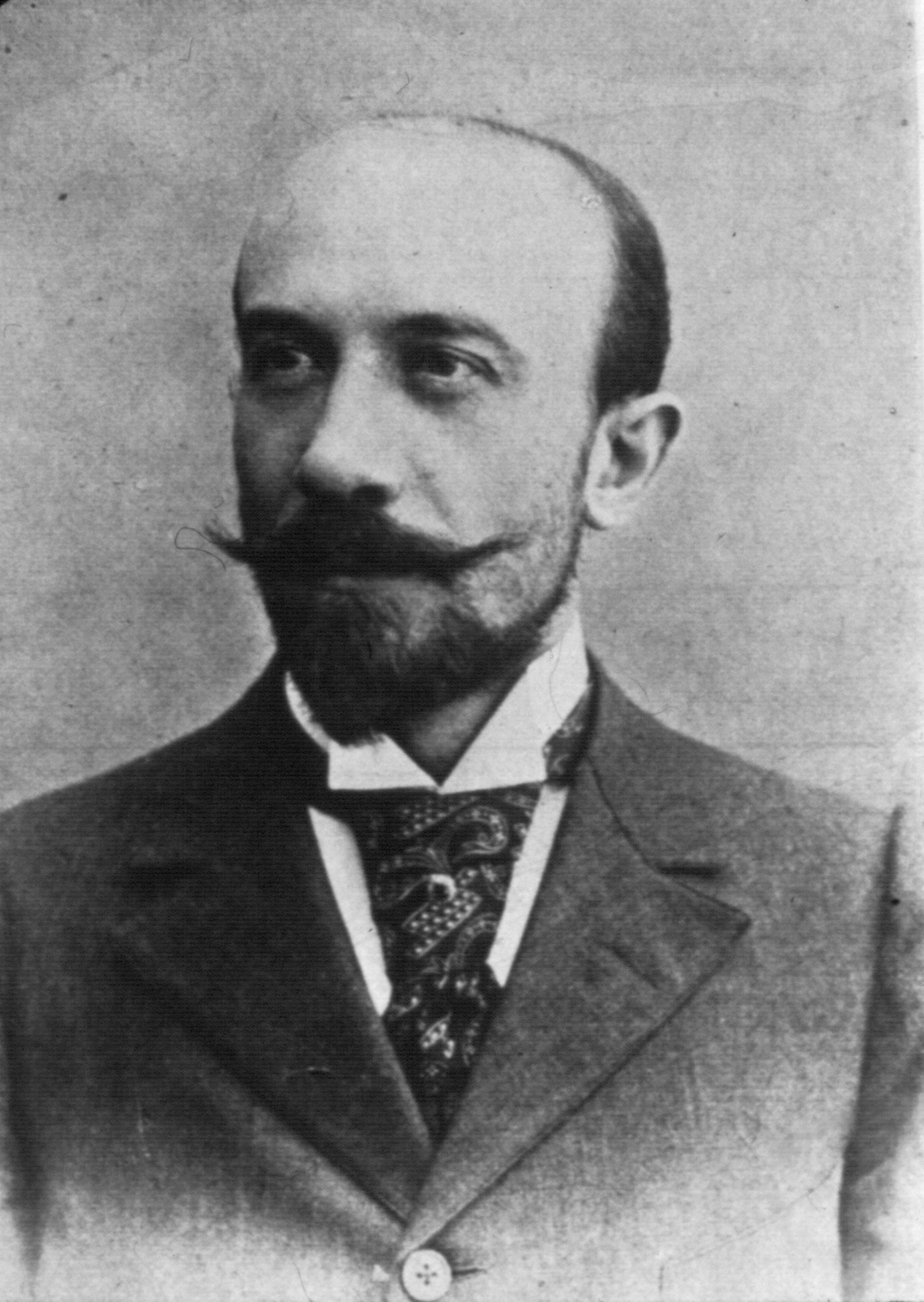
Georges Méliès was born in Paris in 1861. From being young he showed particular interest in the arts which led, him to a put in an arts school in paris called Ecole des Beaux Arts. Where Méliès was interested in stage design and puppetry. George then went onto continuing his studies in London. His parent wanted him to learn the English language because they intended on him working at his father's footwear business. But while he was in London he started to develop a big interest in stage conjury once he had seen the work of maskelyne and Cooke.
When George returned from paris he went and worked at his father's factory and ended up taking over as the manager as his father retired. When he became the manager he was able to raise the money to buy a famous theatre Robert Houldin as it was put up for sale in 1888. Méliès then went onto working full time as a theatrical showman, All his performances were made around magic and illusionist techniques which was what he studied in London. He also worked on his own tricks.
The Lumière Brothers unveiled their Cinematographe to the public in December 28th in 1895, Méliès was a member of the audience, it was clear that witnessing this had an effect upon George. When the show had finished he approached The Brothers with the intention of buying their machine but they turned George down.
George became determined to look into moving pictures and he sought out Robert Paul in London to view his camera projector. After George viewed Roberts he then went onto building his own. George presented his first film screening on april 4th in 1896.
George began by screening other peoples films they were mainly ones made for the Kinetoscope created by Thomas Edison but within a few months he was making and showing his own pieces of work. His first pieces of work were films being one reel, one shot views lasting about a minute.
when George made his films he tackled a wide range of subjects as well as the fantasy films like A Trip To The Moon made in 1902 with a trip to the moon he uses a lot of stopmotion in this film.
- fade ins & outs
- jump cuts
- overlapping
- dissolves
- stop motion
- same angle throughout

Edwin S. Porter became a member of the Vitascope Marketing Company in 1895 where he used his experience as an electrical engineer.
whilst a member at Vitascope Edwin played a key part in organizing the first projected movie show which was held in New York on the 23rd April in 1896. Edwin never stopped using his engineering skills in the laboratory at Edison's manufacturing company owned by Thomas Edison, But Edwin decided to leave and become a freelance projectionist at the Eden muse theatre in 1898.
While Edwin was working as a projectionist one of the duties he was to illegally duplicate George Méliès films by taking apart one act reels and combining others to make a fifteen minute piece of film. Edwin then attempted to make his own camera and projector but failed and in 1900 he went back to Edison's company but instead of going back to engineering he was a producer and director at Edison's East 21st street skylight studio.
being a fan of Georges Méliès films, Edwin attempted to emulate the trick photography which Méliès had created in his films Edwin's attempt was a success and used it in his films. For examples 'The Finish of Bridget McKeen' which he created in 1901 and 'Jack and the Beanstalk' which he created in 1902. Edwin is also one of the first directors to shoot his films at night an example is his film 'Pan-American Exposition by Night'.
Edwin used his editing skills and methods of projection to create a great effect in some of his first films. Edwin liked to combine documentary footage with footage he shot in films like in 'Life of an American Fireman' he used a documentary style for the film .
Edwin's film 'Life of an American Fireman' was created by Edwin combining actual footage of fires, firemen and fire engines with other dramatized footage that Edwin shot, He did this to add tension and make it truly dramatic in a normal setting where as George Méliès whose films drama was made from a fantasy setting.
D.W Griffith

D.W Griffith was born in rural Kentucky. Griffith grew up with his father telling him all his romantic war stories. In 1897 Griffith set out to follow his dream and start his career doing both acting and writing for the theater, but at the start was unsuccessful. Until he got asked to act in a film created by Edwin S. Porter at the Edison Company. Griffith also got a job at a financially struggling company called American Mutoscope & Biograph Co. While working for the company he got to direct over four hundred and fifty short films,while experimenting with the story-telling techniques and took all that he had learnt and created the film 'The Birth of a Nation' in 1915.
Griffith and G.W. Bitzer collaborated to come up with and create different cinematic devices including the flash-back, the iris shot, the mask and cross-cutting. years after "The Birth of a nation", Griffith tried and failed to get his other films the same success as his signature film but sadly the success never came and in 1931, his failures forced him into retirement. Throughout his narrative film-making, he was criticized for his blatant racism, Griffith died in Los Angeles in 1948,but was one of the most dichotomous figures in film history.
Sergei Eisenstein

Eisenstein was a Russian filmmaker who believed that a film montage could make ideas that have a bigger impact on the audience allowing the filmmaker to manipulate real time more than just using single shots.
In 1917 Sergei worked as an engineer for the red army before he joined with the Moscow Proletkult Theater as a set designer and then became a direction. The director Vsevolod Meyerhold was a big influence on Eisenstein because Vsevolod was the one that introduced Sergie to the concept of "bio-mechanics" also known as conditioned spontaneity. Sergei continued to look further into Vsevolds theory using his own montage of attractions using a sequence of images where the emotion effect is the bigger than the sum of its parts. He then went on to theorizing that this styles of editing worked similar to Marx's dialectic. Sergei knew he wanted to make films for the common man he used alot of symbolism and metaphor which he called intellectual montage wit this he sometimes lost his audiences. throughout his career he only ended up making seven films but he demonstrated how film could move further than the nineteenth century predecessor and create concepts with concrete images.
The Kuleshov Effect

The Kuleshov Effect was created by Russian filmmakers Lev Kuleshov and V.I. Pudovkin when they experimented with editing and the emotional responses of the audience. They filmed an actors response to different images to see what emotion he showed. The three images they showed him was a child in a coffin to represent sadness, a woman to represent lust and a bowl of soup for hunger. When you look at the images of the actors face his expression doesn't seem to changed but when mixed with the three shots it suggests to the audience that it does.

Eisenstein was a Russian filmmaker who believed that a film montage could make ideas that have a bigger impact on the audience allowing the filmmaker to manipulate real time more than just using single shots.
In 1917 Sergei worked as an engineer for the red army before he joined with the Moscow Proletkult Theater as a set designer and then became a direction. The director Vsevolod Meyerhold was a big influence on Eisenstein because Vsevolod was the one that introduced Sergie to the concept of "bio-mechanics" also known as conditioned spontaneity. Sergei continued to look further into Vsevolds theory using his own montage of attractions using a sequence of images where the emotion effect is the bigger than the sum of its parts. He then went on to theorizing that this styles of editing worked similar to Marx's dialectic. Sergei knew he wanted to make films for the common man he used alot of symbolism and metaphor which he called intellectual montage wit this he sometimes lost his audiences. throughout his career he only ended up making seven films but he demonstrated how film could move further than the nineteenth century predecessor and create concepts with concrete images.
The Kuleshov Effect
The Kuleshov Effect was created by Russian filmmakers Lev Kuleshov and V.I. Pudovkin when they experimented with editing and the emotional responses of the audience. They filmed an actors response to different images to see what emotion he showed. The three images they showed him was a child in a coffin to represent sadness, a woman to represent lust and a bowl of soup for hunger. When you look at the images of the actors face his expression doesn't seem to changed but when mixed with the three shots it suggests to the audience that it does.

No comments:
Post a Comment